Back Chat Isn't
Always Disrespect
Here's what it could be telling you and what to say next,
without it turning into an argument
Instant access. Just $8.90.
Start tonight. 30 day guarantee.


Back Chat Isn't
Always Disrespect
Here's what it could be telling you and what to say next,
without it turning into an argument
Instant access. Just $8.90.
Start tonight. 30 day guarantee.
Dear Mums and Dads,
You ask how his day was. He shrugs, mutters "fine" and disappears into his room.
Later you ask him to unpack the dishwasher and he says something that stings. You hear yourself snap back. Ten minutes later you're in separate rooms and the house has gone quiet in the worst way.
And then the worry creeps in.
The boy who used to tell you everything is drifting away, and the closeness you two had is turning into short answers and closed doors. You miss him, even though he's standing right in front of you.
If you're honest, you're tired too. By 7pm your patience is running on empty, and some nights you just don't have it in you for another round.
You're not a bad parent. You're a worn-out one who loves their kid and doesn't know what else to try.
Here's what we've learnt: back chat is rarely about disrespect.
There's usually something going on underneath. Once you can see it, you can respond in a way that brings him closer instead of pushing him further away.
What's really behind the back chat
So what's underneath? Usually one of five emotional triggers.
When one gets knocked, his brain goes into protect mode. So does yours. That's the moment one comment turns into a full argument.
Once you can spot which trigger it is, you know what to say next.
We call them the 5 FACES:
Fairness. "That's not fair!"
Autonomy. "I'll do it later."
Connection. "You never listen anyway."
Esteem. "Whatever, I'm useless then."
Security. "Why do I even have to?"
Here's one to try tonight.
Remember the dishwasher? "I'll do it later" sounds like attitude. More often it's Autonomy. He's stretching into his independence, and a straight instruction lands like a threat to it.
So instead of "Unpack the dishwasher now", try "Dishwasher needs doing before dinner. Now, or after your show?"
Same job. He gets a say. The push-back has nothing to push against.
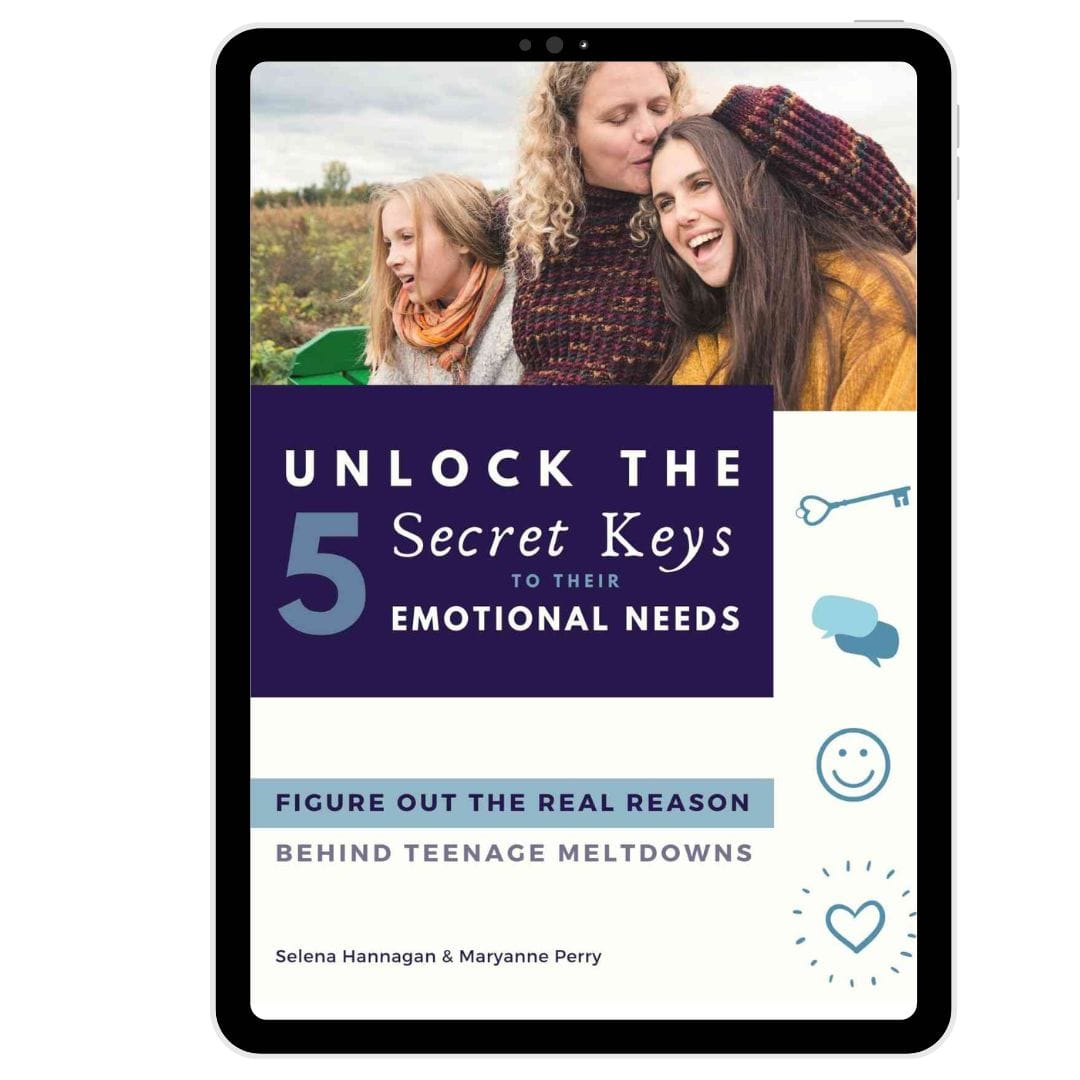
That's one key. The 5 Secret Keys to Their Emotional Needs walks you through all five: how to spot which one's been knocked, and what to say next so he moves towards you, not away.
Who we are
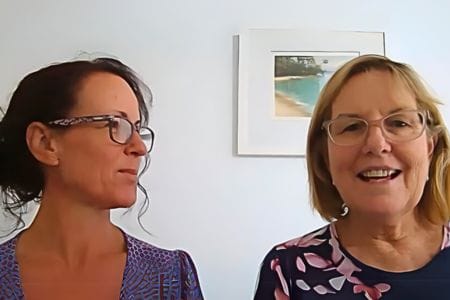
We're Selena and Maryanne.
Maryanne has spent decades as a life coach and psychotherapist, and 25 years before that as a primary school teacher. Selena is a life coach and a mum who has used these tools raising her boys, and doubted herself plenty along the way.
Together we help families connect by teaching them how to hold and navigate the tricky conversations.
Every child is different. Each one has their own way of seeing the world and their own superpowers. Understanding that, and talking to them as your real self, is a big part of what works.
Let us show you what's inside.
What people are saying
"The world needs this understanding and the tools more than ever."
Chelsea Howarth
"Thank you so much for the book, it helps me to have more insights when talking to children."
Shirly Peh
Selena's son once told us the way we talk to him should be taught to parents everywhere, because he feels heard.
Exactly what you're getting
First of all, this isn't like any parenting book you've ever read.
There's no fluff or filler, just tools that work.
And it's easy to read.
At less than 80 pages, you can read it in an afternoon.
And it's about more than just parent communication.
See, you can use these 5 keys in almost any conversation with your teen.
We've used them no matter what the conversation is about or when it's happening.
Whether we're driving and chatting in the car, at the dining room table, holding more serious talks, trying to get out the door on time or tackling a homework crisis.
Even if you use just 1 of these 5 keys, it can change the direction of your conversations towards much happier outcomes, where kids and adults feel heard and acknowledged.
When people feel heard, they're more likely to stay in the conversation.
When we hold those conversations, we build a better connection.
When we feel connected, we know we're doing something right.
So like we said, there's more to this little book than "just" parenting. Here's a fraction of what it gives you...
Spot the trigger in the first few words, and steer the conversation somewhere else before it turns into another argument.
Know what to say when he snaps, so you're not lying awake replaying it at 11pm.
Spend less energy convincing, negotiating and battling, and more time actually talking.
No need to become a Zen master. One key, used once, can pivot a conversation away from a fight.
He's more likely to come to you with a problem, because talking to you stops ending in a lecture.
Watch him start solving his own problems, with you as the person he thinks out loud with.
Bonus: the video synopsis. Maryanne and Selena walk you through the 5 keys in 20 minutes, so you can get the gist tonight and come back to the book when you're ready.
But you know what you'll really love?
A second, bigger benefit
When you use these 5 keys, two things will happen.
First, you'll be of genuine help to building your child's emotional intelligence and resilience.
They'll see you as a confidant and a trusted adviser...regardless of whether they 'got their way' or not.
This is really important to you because it sets you up for a long-term relationship with them where they're significantly more likely to seek your advice or help them with their thinking on any problem.
The next thing you'll notice is this:
Freedom to express yourselves.
Communication at home is a key starting point for how children communicate in their outside world. Strong emotional intelligence transfers to the classroom, playground, with friends and at work.
So it's important we role model healthy communication skills at home.
And you'll do it without using any pressure, you won't have to convince anyone of anything, and you won't even have to turn into a nagging parent to get them to listen!
That's because of the way the brain works.
We've based our 5 keys strategies on neuroscience that actually helps us work with our brains rather than against them!


"But will this work when he barely talks to me?"
That's exactly the parent we wrote this book for.
The 5 keys don't need him to cooperate first. They change how you show up in the conversation. And if you just change the way you're responding, there's room for the conversation to go somewhere else.
"Is this just more theory I'll never use?"
No. Each key is something you can try in your very next conversation, at the dinner table or in the car on the way to school. Read one chapter tonight, try it once, and notice what happens.
"Can't I just wait and see if it settles down?"
You could. But the next eye-roll or closed door is probably already on its way. It's $8.90, it's yours tonight, and if it doesn't help, you get your money back. Waiting costs you more than trying.
Here's what to do next
The cost of this book is $8.90, and you get it instantly as a download. That's less than a takeaway coffee and a muffin, and you'll have something to try at dinner tonight.
As soon as you place your order, you'll get an automated receipt with a link to download the book straight to your inbox.
You can read it anywhere, straight away, without waiting for the postie.
Oh, and in case you're wondering...
There is no catch.
We realise this is very inexpensive, so you might wonder what the catch is.
We're giving you this entire book for $8.90 as a way of putting our best foot forward and showing you real value.
Our hope is that you'll love it, and that this will be the start of a good relationship between us for years to come.
But with all that said, there is ONE thing to keep in mind:
We usually make a loss on this book.
So why would we do that?
Simple.
We're making this offer because we think you'll be impressed with what you get today, and you'll want to hear from us again.
We're betting you'll enjoy the book so much, you'll want to learn more with us.
Pretty straightforward.
And yes, of course there's a money-back guarantee.
In fact, we think it's...

The boldest guarantee in the world
We 100% guarantee you'll love this book. If you don't, tell us within 30 days and we'll refund your $8.90, and you can keep the book and the video synopsis anyway.
That's right.
You don't even have to send anything back.
Just email us or call the number on your receipt and we'll give you back your $8.90, no questions asked.
How's that for fair?
Thanks for taking the time to read this letter. We look forward to speaking with you soon.
Warmly,
Selena & Maryanne
P.S. In case you're one of those people who skip to the end of the letter, here's the deal:
We're offering you an 80-page book that shows you how to pivot away from arguing with your teen and build their emotional resilience.
The book is $8.90.
It's the same approach we use with our own teens, so they come to us to help them think things through. That builds a connection for life.
It doesn't use convincing, manipulating or any of the typical "behaviour strategies". In our experience, it simply works better.
There's no catch. You won't be signing up for a trial or a monthly program.
And if you don't like the book, let us know and we'll give you back the $8.90. You don't even need to send it back.
You won't regret it.